The Spirit of 1851: Enterprise, Service, Endurance
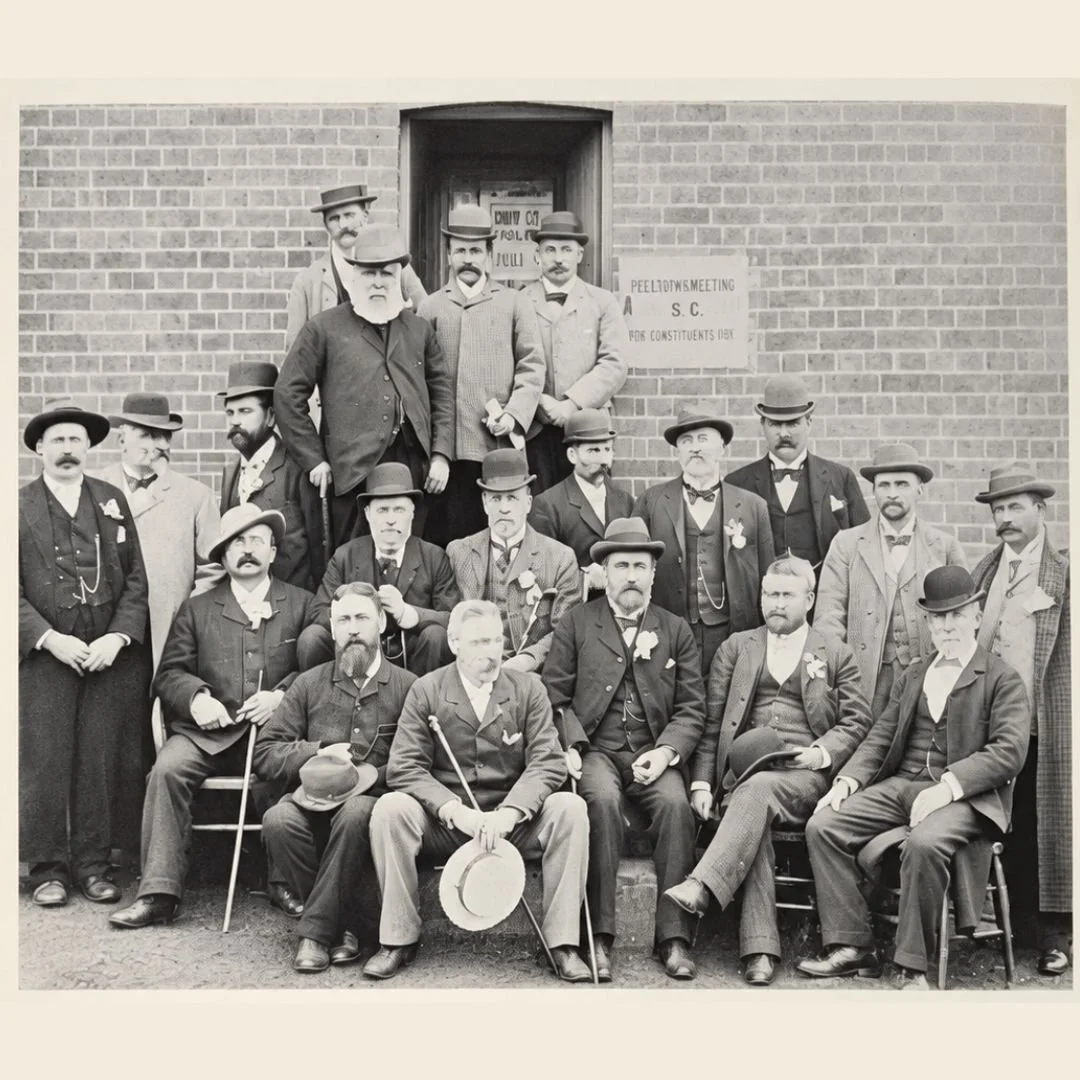
Pietermaritzburg Agricultural Society Committee, 1898.
Heritage Day asks us to remember what was handed down to us.
For descendants of Natal’s colonial settlers, there is a substantial inheritance worth remembering: not merely buildings, farms or institutions, but a particular record of enterprise, voluntary service, practical experiment and persistence. Few institutions illustrate it better than the Royal Agricultural Society of Natal.
When the Pietermaritzburg Agricultural Society was founded in 1851, there was very little inevitability about its survival.
Natal’s new farmers were working in an environment they scarcely understood. Roads were primitive, markets distant, capital scarce and agricultural knowledge uncertain. Crops that had seemed promising failed. Livestock disease could destroy years of work. Transporting produce or animals to Pietermaritzburg could itself be an undertaking.
And yet, extraordinarily, people who had sometimes been on their farms for barely a year decided not merely to survive, but to hold an agricultural show.

A drawing of Market Square in 1857, the second home of the Royal Agricultural Show.
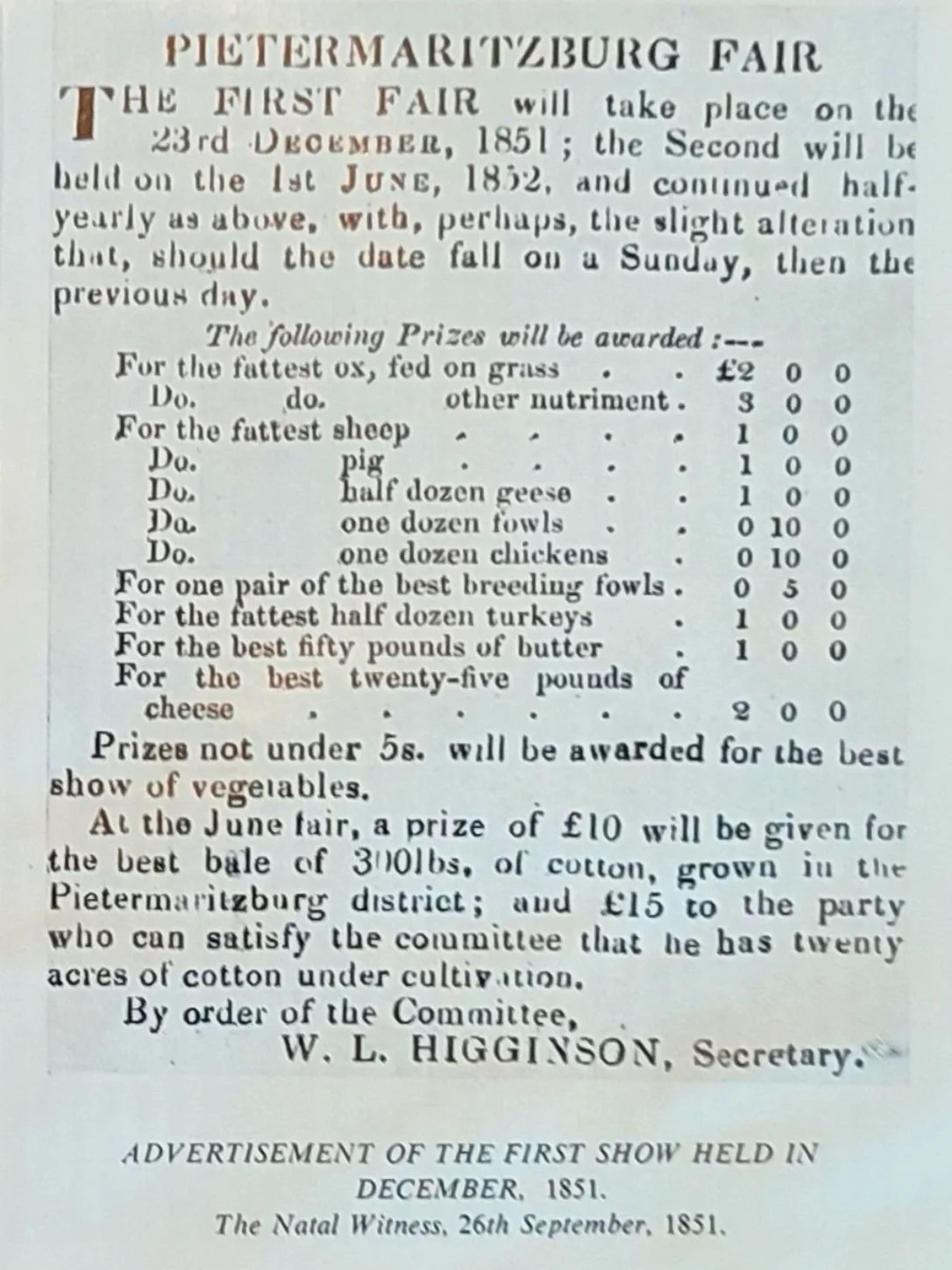
The story begins with a gift. An unnamed gentleman, returning to the Cape, left £10 with William Leinster Higginson for agricultural prizes. Higginson helped turn the idea into an institution. By December 1851 the new Society had been organised and its first Show held. Its entire revenue of about £18 was committed to prizes—and all but two prizewinners gave their winnings back to help finance the following year.
There is something revealing in that small episode.
The first instinct was not: What can I get out of this? It was: How can we make this continue?
That attitude would recur throughout the Society’s history.
They were prepared to learn
Perhaps the most important quality of the early agricultural settlers was their willingness to experiment.
Many arrived with experience from Britain, including farmers familiar with comparatively advanced techniques. But Natal was not Yorkshire. Climate, rainfall, soils, disease and seasonal conditions were different.
So they tried things.
Wheat was pursued enthusiastically, then progressively abandoned where conditions proved unsuitable. Farmers tested cotton, coffee, sugar, oats, lucerne, maize and different forms of stock farming. They imported breeding animals, crossed strains and compared results. Edwin Parkinson demonstrated that sheep could prosper where many had believed they could not; breeders travelled considerable distances to acquire better stock, while exhibitors sometimes drove animals scores of miles to the Pietermaritzburg Show.
What emerges from these histories is not a picture of men possessing ready-made answers. It is something more admirable: people willing to discover that they were wrong.
They observed. They experimented. They compared. They changed direction.
That intellectual flexibility mattered enormously. Agricultural progress came through accumulated practical knowledge rather than stubborn adherence to imported assumptions.
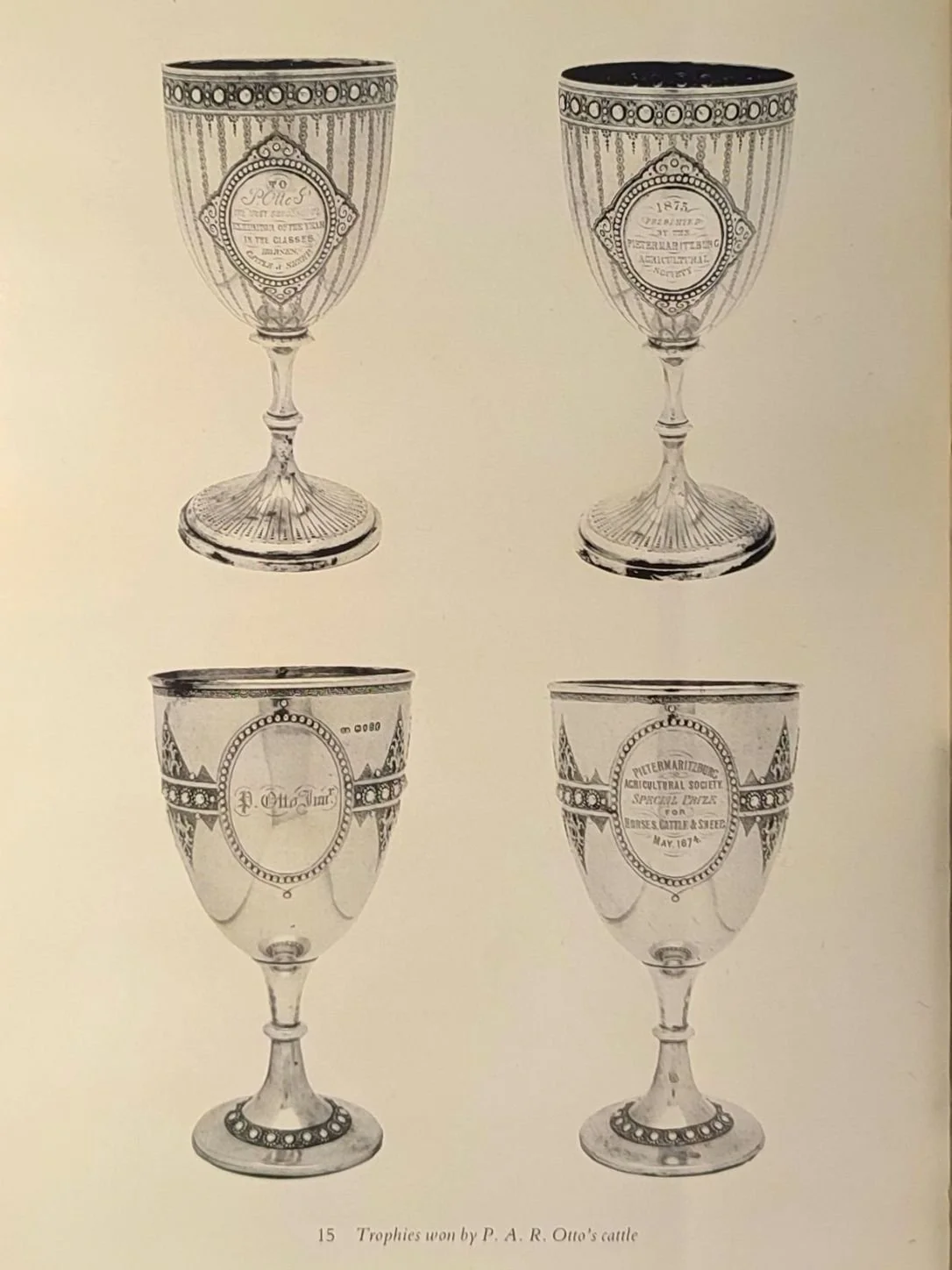
Trophies won by P.A.R. Otto’s cattle during the 1870’s.
They created a culture of improvement
The Show itself became part of that process.
Competition established standards. A farmer could see another man’s bull, sheep, horse, crop or implement and ask why it was better than his own. Excellence became visible.
Better bloodstock was imported. Agricultural inventions appeared. Farmers exchanged knowledge. Eventually the Society helped establish a judges’ association specifically to standardise judging and improve competence. Its close relationship with Cedara Agricultural Research Station created a particularly productive exchange: research improved what appeared in the Show ring, while competition and exhibition encouraged further ambition and experimentation.
This suggests an important underlying theme: the founders understood, perhaps instinctively, that progress accelerates when knowledge becomes communal.
They did not selfishly improve individual farms. They built mechanisms through which improvement could spread.
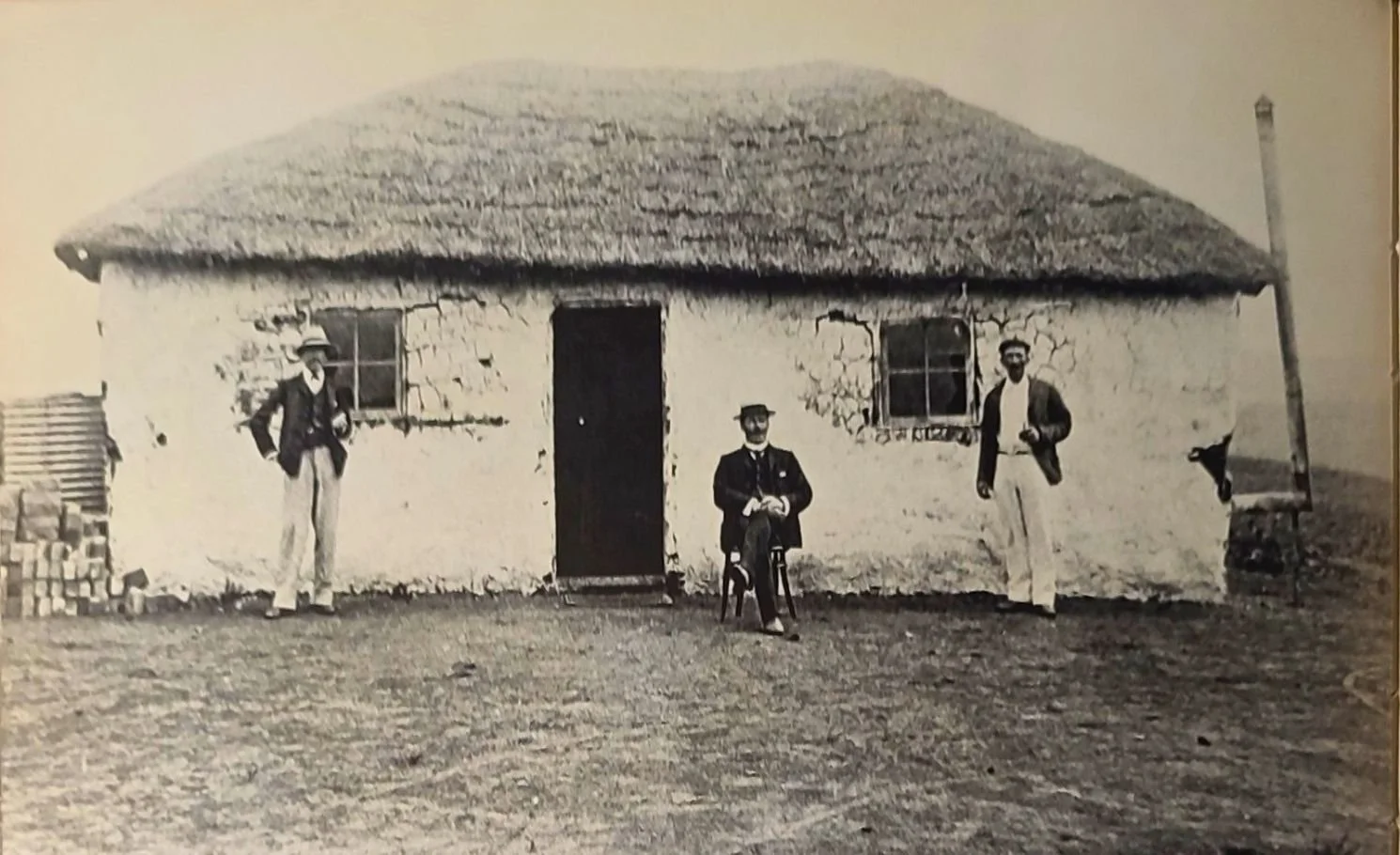
The original building at Cedara, on the site that is now the Cedara College of Agriculture.
They cooperated despite their differences
The Society was also born into a small community riddled with personal and political quarrels. Yet its first executive brought Dutch- and English-speaking colonists together around a practical common purpose. The cooperation was striking from the beginning, and continues to this day.
Agriculture gave people something concrete to build together.
That may be another reason the institution endured: disagreement did not have to mean disintegration. People who differed profoundly elsewhere could still judge cattle, organise a Show, improve roads, raise subscriptions or promote better farming together.
Institutions survive when their purpose becomes larger than the personalities temporarily occupying them.
They gave
Again and again, the story returns to giving.
People donated money, trophies, land, expertise and enormous quantities of time. Women worked voluntarily for decades and built the Crafts and Home Industries Section into a major institution. Farmers served as committee members, judges and stewards. Veterinarians gave professional services. Exhibitors undertook difficult journeys simply to participate. Benefactors advanced money when the Society needed premises or improvements.
The Royal Show was built not by a handful of famous presidents but by generations of donors, exhibitors, auctioneers, judges, stewards, officials, staff and voluntary workers whose individual contributions accumulated into something enduring.
This was institution-building in its most literal form: people repeatedly doing work for something they did not personally own.
And when circumstances changed, they adapted
The Society survived livestock epidemics, droughts, locusts, economic depressions, the South African War, two World Wars, floods, and periods when government assistance disappeared. East Coast fever closed the cattle section for years. Membership collapsed during the crisis before Union. During the Depression, income and attendance declined sharply. From 1941 to 1946 there was no Show at all.
Yet interruption never became surrender.
Buildings were leased when money was needed. Prize expenditure was reduced. New income sources were found. Facilities were expanded when circumstances improved. Sound administration mattered as much as enthusiasm: public support, far-sighted leadership and careful management—especially in financial difficulty—were central to the Society’s survival.
By 1953, the little voluntary society that had begun with £18 and sixteen prize classes had thousands of members and a Showground transformed beyond recognition.
The deeper achievement, however, was not the acreage, buildings or attendance figures.
It was continuity.
Generation after generation accepted responsibility for something begun before them and intended to leave it stronger for those who followed.
As the Society’s president M. J. Power observed at the centenary, its survival depended upon the “continuous enthusiasm” of voluntary members—the courage and determination to carry on through adversity.
That may be the finest description of the inheritance.
Be curious enough to learn.
Competitive enough to improve.
Generous enough to give.
Practical enough to adapt.
And determined enough to carry on.
One hundred and seventy-five years after that first wet December Show, those qualities remain something worth remembering—and something worth being proud of.